 The 15th Court of Appeals has dismissed for lack of jurisdiction an attempt by a workers’ compensation claimant to use a district court to block an administrative law judge’s order on a discovery matter in a workers’ compensation dispute.
In re Fort Bend County (No. 15-25-00102-CV; February 24, 2026) and Francesca Okonkow, Administrative Law Judge, Texas Department of Insurance, Division of Workers’ Compensation, In Her Official Capacity and Fort Bend County (No. 15-25-00061; February 24, 2026) arose from a workers’ compensation dispute between the surviving spouse of a deceased paramedic and Fort Bend County. Plaintiff initiated a contested case proceeding at DWI. Fort Bend County sought a subpoena for the paramedic’s mental health records from a physician who prescribed her ADHD medication, arguing that they were relevant and material because the physician might have taken into account her hypertension along with her complaints about stress. Plaintiff objected to the subpoena, which the ALJ overruled. Plaintiff subsequently filed suit in Harris County district court seeking a TRO against issuance of the subpoena just three days before the scheduled contested case hearing. The district court granted the TRO and then held a hearing on Plaintiff’s request for a temporary injunction, which was continued to allow the parties to try to work out the dispute.
When this failed, Fort Bend County served the physician with the subpoena. Plaintiff filed a second request for TRO and request to continue the TI hearing. Fort Bend County the ALJ filed pleas to the jurisdiction. The trial court granted the TRO and the TI, denied the county’s plea, and denied in part and granted in part the ALJ’s plea. It set the case for trial on December 1, 2025. Defendants filed interlocutory appeals and the county sought mandamus relief. The court of appeals stayed all proceedings in the trial court and the contested case hearing pending its decision on the mandamus proceeding and interlocutory appeal.
In an opinion by Justice Field, the court of appeals conditionally granted mandamus relief, rendered judgment dismissing the underlying suit in district court for lack of jurisdiction, an dismissed the interlocutory appeal of the trial court’s TI as moot. Taking up the trial court’s jurisdiction first, the court observed that “the Legislature conferred on an ALJ the authority to decide discovery disputes and evidentiary issues, including the power to issue subpoenas for mental health records.” § 410.165, Labor Code; § 611.006(a)(11), Health & Safety Code; 28 TAC § 142.2. If a party does not comply with a subpoena, either the ALJ or the party requesting the subpoena may seek an order compelling compliance from a district court. § 2001.201(a), Government Code. In this event, district court review “is limited solely to whether compliance with the subpoena is required and whether a person should be held in contempt for failure to comply with its order.” The objecting party, however, has no such remedy but may “include its complaint about the subpoena in its administrative appeal after the contested case hearing concludes and in its later suit for judicial review, should it choose to file one.” § 410.251, Labor Code. In other words, the court stated, the Legislature made a policy decision to “create[] a limited exception to the Division’s exclusive jurisdiction in aid in the enforcement of subpoenas.”
Here Plaintiff filed suit seeking to enjoin the subpoena, whereas the relevant statutes only authorized the ALJ or the county to file suit to enforce it. As the court put it, “[i]nstead of exhausting his administrative remedies through the proceeding that he initiated, [Plaintiff] sought to create his own remedy over the discovery dispute—a separate suit asking a district court to intervene in the administrative process and quash a subpoena issued by the ALJ—without legislative authority for that action.” The trial court thus lacked jurisdiction over Plaintiff’s suit.
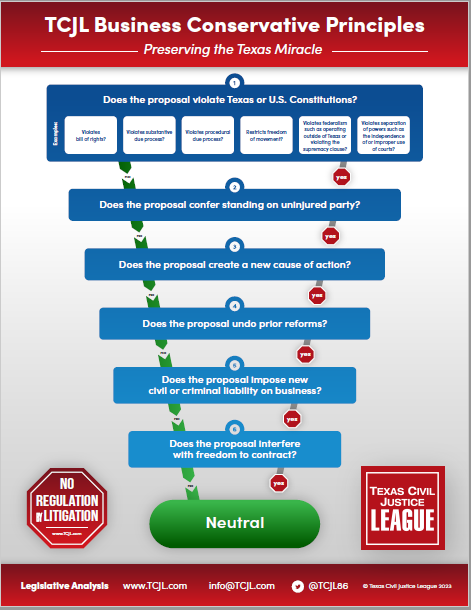
This is an important decision because it speaks directly to the integrity of the workers’ compensation system and to preventing the system from regressing to the pre-1989 litigation free-for-all that made workers’ compensation coverage unaffordable for employers. We appreciate the court of appeals’ attention to the fundamental policy principles that support the statutory scheme.