 For the second time in three years, the Fort Worth Court of Appeals has found that a Tarrant Court district court abused its discretion for failing to follow the law in determining attorney’s fees to defendants who prevailed on a Rule 91a motion to dismiss for failure to state a claim.
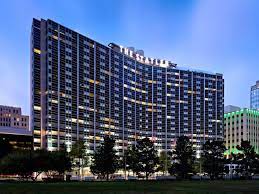
Matthew D. Challis and Jefferies, LLC v. Fiamma Statler, LP; Fiamma Partners, LLC; and Fiamma Management Group, LLC (No. 02-22-00047; delivered March 16, 2023) arose from the renovation and redevelopment of the Statler Hotel and downtown public library in Dallas. The deal involved complex financing that, among other things, included federal funding and tax increment financing (TIF). As the project proceeded, the parties fell out over cost overruns, and defendants Challis and Jefferies, LLC brokered a deal on behalf of the project developer to sell the TIF funds. Fiamma, a minority owner of the project who also held the management contract, ended up suing everybody for fraud and breach of fiduciary duty. What followed was a long litany of nonsuits and amended pleadings, the ultimate result of which was Challis and Jefferies moving to dismiss Fiamma’s claims under Rule 91a. The trial court granted the motion but awarded Challis and Jefferies only 5% of their proven attorney’s fees. The court of appeals affirmed the dismissal but remanded the attorney’s fees issue to the trial court for redetermination. Once again, the trial court awarded a small fraction of the fees. Once again, Challis and Jefferies appealed. And once again, the court of appeals remanded for redetermination.
In this case the court applied the original version of Rule 91a, which mandated that a trial court award reasonable and necessary attorney’s fees to the prevailing party. (In 2019 the Legislature amended the statute to make the attorney’s fees award discretionary.) The appropriate methodology for determining an award is the lodestar method, which involves “(1) determining the base lodestar, i.e., the presumptively reasonable amount of fees; then (2) adjusting the base lodestar if necessary” (citations omitted). To determine the base lodestar, the factfinder should multiply the “reasonable number of hours that counsel spent on the case” by the “reasonable hourly rate for such work.” In Arthur Andersen & Co. v. Perry Equip. Corp., 945 S.W. 812 (Tex. 1997), SCOTX set out the factors the court must consider, including: “the time and labor required; the novelty and difficulty of the questions involved; the skill required to perform the legal services properly; the fee customarily charged in the locality for similar legal services; the amount involved; the experience, reputation, and ability of the lawyer or lawyers performing the services; whether the fee is fixed or contingent on results obtained; the uncertainty of collection before the legal services have been rendered; and the results obtained” (citations omitted). After applying the Andersen factors, the factfinder can adjust the base up or down based on more general principles of fairness.
Here the defendants proffered detailed evidence that they incurred $653,000 in trial court fees and another $543,000 in appellate court fees (which have now covered two trips to the court of appeals and one to SCOTX on the Rule 91a issue). This evidence included billing rates and records, market comparisons for similar matters in the DFW market, the amount of the case (plaintiff had sued for more than $100 million), and the threat of an adverse result of the defendants’ business reputations. Plaintiff’s only controverting evidence was its trial counsel’s affidavit averring that a “simple Rule 91a motion” shouldn’t take that much work and that defendants’ counsels’ hourly rates were “excessive.” Based on these naked assertions, plaintiff proposed a fee award of $75,000 or trial and $50,000 for appeal.
The trial court awarded less than even the plaintiff proposed: $74,000 and $40,000. The court’s findings of fact and conclusions of law did not explain the basis for the award or how the court arrived at these numbers. While the court of appeals acknowledged that the defendants “were not necessarily entitled to recover all of their requested but contradicted attorney’s fees,” or for that matter, even all of their uncontradicted fees, the great weight and preponderance of the evidence indicated that the trial court’s award was grossly disproportionate. Although defendants requested that the court of appeals simply render judgment, the court of appeals declined to do so, stating that “[a]n award of attorney’s fees is, and should remain, within the discretion of the trial court . . . The trial court is more than capable of exercising its discretion within the bounds of the law, and we trust that it will do so upon a second remand without the need for a third.”