 In a case we first reported last September, the Texas Supreme Court has answered a certified question from the U.S. Fifth Circuit Court of Appeals calling for an interpretation of Article I, § 6-a, Texas Constitution, the “religious-service-protections” clause.
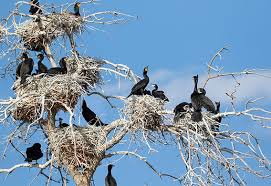
Gary Perez; Matilde Torres v. City of San Antonio (No. No. 24-0714; June 13, 2025) arose from the city’s development plan for Breckenridge Park. Plaintiffs, members of the Lipan-Apache Native American Church, filed suit in federal court seeking declaratory and injunctive relief blocking the city from repairing retaining walls on the San Antonio River, renovating the historic Pump House, and constructing a handicap-accessible ramp in an area of the park known as Lambert Beach. Plaintiffs alleged that the city’s project plan would deny them access to an area of religious worship and result in the destruction of certain trees for nesting cormorants, a necessary component of religious ceremonies.
From about February 2023 to November 2023, the city temporarily prevented Native American Church members and peyote pilgrims from entering the area, triggering this lawsuit. Plaintiffs sought a preliminary injunction providing for access to the area for services, minimizing tree removal, and allowing cormorants to nest in the area. After a four-day hearing, the district court held that although Plaintiffs demonstrated a sincerely held religious belief, the city’s plan did not burden their free exercise of religion. The court, however, granted access for religious services involving 15 to 20 people for about an hour on specified astronomical dates. As to deterring cormorants from nesting, the court determined that the “operation was within the realm of public health and safety,” and that the city had met its burden of proving “a compelling government interest for public health and safety.” Plaintiffs sought emergency relief from the Fifth Circuit.
In April 2024, the Fifth Circuit issued an original opinion holding that Plaintiffs failed to establish a likelihood of success on the merits of their Article I, § 6-a claim that the city’s project will “‘prohibit or limit’ religious services.” Plaintiffs asked the court to certify that question to the Texas Supreme Court, given the paucity of authority on the issue. Plaintiffs argue that § 6-a categorically bars the city from doing anything in that part of the park, regardless of whether the city can satisfy the strict scrutiny test by showing a compelling public interest in public health and safety. The Fifth Circuit thus certified the following question to SCOTX: Does the “Religious Service Protections” provision of the Constitution of the State of Texas—as expressed om Article I, Section 6-a—impose a categorical bar on any limitation of any religious service, regardless of the sort of limitation and the government’s interest in that limitation?
In an opinion by Justice Boyd, SCOTX stayed to the facts of the case without making any general pronouncements beyond the plain text of § 6-a. The Court looked to the constitutional provision, approved by the voters in 2021, to determine what it “would have meant to those who ratified it” (citations omitted). This “originalist” approach attempts to fix the meaning of the text for all time, regardless of how “it operates upon new subjects and changed conditions.” Getting at what might have been in the framers’ and voters’ minds at a snapshot in time is far from easy, so the Court relies not only the “literal text,” but the text’s “‘historical and linguistic context—that is, the ‘full context of the constitutional language and history’” (citation omitted). The Court “may consider evidence of the contemporaneous explanations and understandings of the legislature that proposed the language and the electorate that voted on its ratification” (good luck with the latter part).
As Justice Boyd explained, “[t]he parties and amici generally treat the certified question as inquiring about both (A) the ‘force’ of the Clause when it applies (that is, whether it imposes a ‘categorical bar … regardless of …the government’s interest in [the] limitation’) and (B) the ‘scope’ of its application (that is, whether it imposes a bar ‘on any limitation of any religious service, regardless of the sort of limitation’).” Obviously, Plaintiffs argue for a categorical bar, while the City argues that narrowly tailored limitations may be imposed to promote a compelling governmental interest.
The Court declined to accept either view. “We need not—and, therefore, should not and do not—attempt to exhausively or precisely define the Clause’s scope to answer the certified question in a way that assists the federal court in deciding this case,” Justice Boyd wrote. “We conclude only that its scope does not reach the tuype of governmental actions about which [Plaintiffs] complain.” The question of “force” turned on whether § 6-a should be read to incorporate a “strict scrutiny” standard that SCOTUS uses in free exercise cases (and SCOTX in Art. I, § 6 freedom to worship cases) and that the Legislature expressly included in the Texas RFRA. The language of § 6-a imposes a categorical bar, stating that “the government ‘may not’ impose a requirement that ‘prohibits or limits religious services.’” That bar has to have to some effect, for otherwise § 6-a wouldn’t confer any greater protection for religious exercise than existing law.
Noting that the constitutional amendment followed in the wake of the COVID-19 pandemic, in which local governments shut down places of worship to mitigate the spread of the virus, Justice Boyd took this to mean that voters thought that § 6-a provided greater protection than current law did during the pandemic. But does that mean that a governmental entity can never restrict religious services under any circumstances? The City said surely not because noconstitutional protection has been construed as unlimited. But the Court disagreed, at least to the force question. As to the scope question, however, the Court was willing to accept that some boundary existed, but it was not willing to draw that boundary. But wherever the boundary may be, “governmental actions taken to preserve and maintain public property for the safety and enjoyment of the public” is beyond it.
Pointing to the House sponsor’s statements on the floor that “existing local laws and ordinances and rules dealing with the fire code, with health and safety hazards, with zoning restrictions, those with criminal justice and public safety laws” would not be affected, the Court declined to be more specific than that. Instead, trying to find solid ground, it could only “conclude with assurance … that [§6-a] generally forbids governmental enactments that prohibit people from gathering for a religious service (like the COVID lock-down orders), restrict the number or relationships of people who can gather for a religious service (like the COVID orders imposing capacity caps), or regulate the activities in which people may engage when they gather (like the COVID orders prohibiting singing, chanting, or communion).” On the specific facts of this case, the City was not prohibiting the church from gathering or regulating what it can do when it does. Rather, the City “at most [] eliminates or reduces natural elements of the City’s real property that the Church believes are necessary components of its religious services.” In other words, this ain’t like COVID.
As Justice Boyd pointed out, no one argued that just because the church wanted to gather and worship on public land didn’t require the City to “provide the Church with components that are necessary for its religious services or to prevent limitations on those components caused by other sources.” The City could even sell the property to a private developer and do away with the problem altogether. The Court recognized “tensions” between religious liberties and the use of public lands, but didn’t opine upon them either way.
Justice Sullivan dissented. He would have passed altogether on issuing an “advisory opinion” and left it the Fifth Circuit. That’s a fairly reasonable position to take given the difficulty of actually answering the 5th Circuit’s question. At the same time, the other eight justices also took a reasonable position without going a step beyond the immediate facts of this case.