
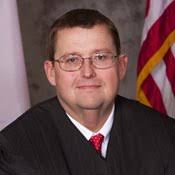
Chief Justice John Bailey
The Eastland Court of Appeals has affirmed a trial court order dismissing under Rule 91a a wrongful death case against an employer whose intoxicated employee allegedly caused the death of a passenger in his vehicle.
Maria Antonia Castillo Herrera, Individually and as Representative of the Estate of Felipe F. Oviedo Castillo v. CWJ Forklift Service, LLC; Cody Wayne James; and Teresa Jean James (No. 11-24-00019-CV; January 30, 2026) resulted from a motor vehicle accident in which Castillo was ejected from a vehicle operated by another driver. Decedent’s mother alleged that, at the time of the accident, the driver was intoxicated and that the accident occurred because he was driving too fast. Herrera, Castillo’s mother, sued the driver and CWF Defendants, whom Plaintiff alleged employed the driver. She asserted that Defendants failed to stop the driver from leaving a party while intoxicated and sought damages for negligence, gross negligence, wrongful death, and survival from CWJ and its principals. Defendants answered and filed a Rule 91a motion to dismiss. The trial court granted the motion. Plaintiff appealed.
In an opinion by Chief Justice Bailey, the court of appeals affirmed. Plaintiff contended that the trial court erred by granting the Rule 91a motion. She asserted in her pleading that the party in question took place on the employer’s premises and that various alcoholic beverages were served to the employee-driver. Defendants responded that the facts alleged in Plaintiff’s petition didn’t give rise to a valid cause of action because, as social hosts, they didn’t owe a duty of care to Plaintiff. “Under Texas law,” the court observed, “in the absence of a relationship between the parties giving rise to the right of control, one person is under no legal duty to control the conduct of another.” Graff v. Beard, 858 S.W.2d 918, 919 (Tex. 1993). But SCOTX has also “held that an employer may be responsible for the conduct of an intoxicated employee who is off duty if the employer is negligent when it affirmatively exercises control over the employee.” Greater Houston Transp. Co. v. Phillips, 801 S.W.2d 523, 526 (Tex. 1990).
Although a social host is not responsible for injuries caused by the conduct of an intoxicated guest, even when the event is hosted by the employer of the tortfeasor, the Otis standard holds the employer responsible if: (1) the employer had actual knowledge that the employee is impaired when leaving work on the day of the accident; (2) the employer exercises control over the incapacitated employee; (3) the employer’s exercise of control is also an act of negligence; and (4) the employer’s efforts to control the employee must be an affirmative act. Otis Engineering Corporation v. Clark, 668 S.W.2d 307 (Tex. 1983).
Here Plaintiff alleged that Defendant Teresa made statements at the party indicating that she thought the driver was drunk and that it was unsafe for him to drive. Plaintiff’s pleadings thus alleged facts sufficient to support Defendants’ knowledge of the employee’s intoxication to the point of incapacity. But simply asserting that Teresa may have thought that was not enough to show “a negligent and affirmative act of control under Otis.” Plaintiff didn’t indicate whether attendance at the party was mandatory or where Teresa provided instruction in her capacity as a supervisor. Still, reading Plaintiff’s pleadings liberally, the court assumed that Teresa’s statement to the driver “constituted an attempt to control his conduct based on the employer-employee relationship.” But observing that Teresa allegedly told the drive that he shouldn’t drive, the court concluded that Plaintiff “failed to allege a negligent act of control” (noting that in Otis, the supervisor suggested to the employee that he should drive home). Teresa’s statement didn’t make the situation worse but “was calculated to reduce the risk of an accident or harm to others.” Plaintiff likewise failed to allege anything showing that Teresa committed an affirmative negligent act, such as instructing the driver “to drink, drive, or engage in any other conduct that might put him or others at risk of injury.”
The court affirmed the trial court’s order dismissing the case under Rule 91a.











