 The El Paso Court of Appeals has applied the ripeness doctrine to dismiss neighboring landowners’ suit against a real estate developer for negligent nuisance.
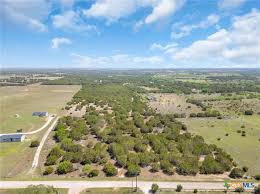
Recreational Land Sales, LLC/James M. Allen, Charles Cedars, and Deborah Cedars v. James M.Allen, Charles Sedars, and Deborah Cedars/Recreational Land Sales, LLC (No. 08-24-00375-CV; April 7, 2024) arose from a dispute between a real estate developer and neighboring landowners in Burnet County. Defendant Recreational Land Sales (RLS) bought a 1,472-acre tract called the Cross Timbers Ranch and subdivided part of it into 17 lots of 5-8 acres each. The deed subjected the subdivided acreage to restrictive covenants of the subdivision, Blacksmith Ranch. In the event, RLS had no idea where the Blacksmith Ranch was located because there was no recorded map or plat. It hired a surveyor to figure it out, and in the meantime discovered that no Architectural Control Committee or HOA had every been formed. It found one of the four members of the alleged ACC, who informed RLS that there had never been any activity in enforcing the covenants.
In 2021 RLS applied to Burnet county for a subdivision plat of Cross Timber Ranch, which the county approved. It then sold the lots and installed a gate, powerlines, and a road through the subdivision. Enter the neighbors, who filed suit against RLS for breach of contract, fraud, and injunctive relief. The Cedars later joined in a plaintiffs. Together they asserted claims for breach of restrictive covenants, intentional nuisance, and negligent nuisance. After Plaintiffs rested, RLS moved for a directed verdict. The trial court granted its motion as to the breach of a restrictive covenant claim but denied it as to the nuisance claims. At closing, Plaintiffs for the first time introduced a damages model for past and future damages. RLS objected, but the trial court allowed it in. Questions of intentional and negligent nuisance went to the jury, which found RLS liable on the negligent nuisance claims and awarded nearly $600,000 to Plaintiffs. RLS appealed.
In an opinion by Chief Justice Salas Mendoza, the court of appeals reversed and rendered. RLS argued, among other issues, that because Plaintiffs had no concrete injuries, they lacked standing and their claims were not ripe for review. The court chose to construe this issue as one of ripeness, not standing per se. It thus focused on “whether [Plaintiffs] presented jurisdictional evidence showing that RLS causes a substantial and unreasonable interference and that [Plaintiffs] suffered actual damages to render their claim ripe.”
Plaintiffs’ complaints about the prospect of 17 new neighbors, however, didn’t meet that standard. The engineering plans submitted to the county for plat approval were admitted at trial without objection. Those plans showed a Schematic Utility Design with possible sites for homes, septic systems, and wells. At the time of trial, the land remained undeveloped and none of that had been built or were there any plans to begin construction any time soon. Plaintiffs confirmed that nothing had been done, and all of their fears involved future speculation. RLS did build a gate and a road, which were completed well before trial. But none of the Plaintiffs could say that these structures interfered with their use of the land. Based on the record, the court held that Plaintiffs’ claim for negligent nuisance was not ripe for review. Consequently, the trial court lacked subject matter jurisdiction.
Plaintiffs filed a cross-appeal asserting that the trial court erred in granting RLS a directed verdict on their breach of restrictive covenant claim for lack of evidence of damages. Unfortunately, Plaintiffs could locate no Texas authority “on the question of whether loss of enjoyment damages are available in a breach of restrictive covenant case and, if so, under what circumstances.” The court thus couldn’t conclude that trial court made a mistake. The court reversed and rendered for RLS.