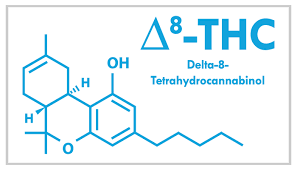
 In a closely watched and highly contentious case with enormous impact on businesses across the state, the Texas Supreme Court has reversed a Travis County trial court’s injunction blocking the Department of Health Services from enforcing its decision to consider synthetically-derived delta-8 THC a Schedule I controlled substance.
Texas Department of State Health Services and Dr. Jennifer A. Shuford, in Her Official Capacity as Commissioner of the Texas Department of State Health Services v. Sky Marketing Corp., d/b/a Hometown Hero; Create a Cig Temple, LLC; Darrell Surif; and David Walden (No. 23-0887; May 1, 2026) arose from the 2019 Texas Farm Act, which deleted hemp and the THC in hemp from the list of controlled substances under the Texas Controlled Substances Act. This change followed the adoption of the federal 2018 Farm Bill that excluded hemp from the definition of marihuana and the THC in hemp from list of Schedule I controlled substances. In 2021, the DSHS commissioner declined to adopt the DEA’s rule, implementing the Farm Act, decontrolling “hemp-derived extracts containing less than 0.3%-THC content,” along with the hemp plant itself. The upshot of the commissioner’s action was to decontrol only consumable hemp products that do not exceed 0.3% Delta-9 and continue to bar “all other forms of THC, including Delta-8 in any concentration and Delta-9 exceeding 0.3%.”
Delta-8 THC manufacturers, retailers, and individuals promptly sued DSHS and the commissioner, asserting ultra vires claims and challenging the validity of the rules under the APA. They sought injunctive relief. DSHS and the commissioner filed a plea to the jurisdiction, asserting sovereign immunity and lack of standing. The trial court denied the plea and granted a temporary injunction enjoining the enforcement of the rules. The department appealed, but the court of appeals affirmed, holding that Plaintiffs had standing and that the trial court did not err in denying the plea to the jurisdiction as to their ultra vires and APA claims. SCOTX granted review.
In an opinion by Justice Young, SCOTX affirmed in part and reversed in part. Commencing with the standing issue, the court walked through the three-part test. First, Plaintiff Sky Marketing established that it had suffered an injury-in-fact because when the commissioner issued the 2021 Schedules, it “scrambled to pull its products, halt sales, and destroy inventory. The alleged result was that Sky Marketing missed out on revenue previously earned through the sale and distribution of delta-8-THC products, fired significant portions of its workforce, suffered harm to its business reputation, and was deprived of a property interest in its department-issued Texas Hemp License.”
For the second prong—whether the alleged injury was fairly traceable to the DSHS’s conduct—the Court had no trouble determining that Sky Marketing’s injury was directly traceable to the commissioner’s adoption of the new schedules, which carried the threat of civil enforcement, including the loss of Sky Marketing’s license. In other words, “Sky Marketing was not obligated to bet the farm by violating Texas law and risking severe—potentially fatal—penalties to obtain judicial review.”
Was Sky Marketing’s injury redressable by the requested relief? Yes, because [i]nvalidating the department’s actions purporting to ban delta-8-THC products would redress at least some of Sky Marketing’s monetary and reputational injury by allowing it to return to manufacturing and selling those products.” And, in fact, since the temporary injunction was granted, “manufactured delta-8-THC products have sprung back, and the hemp industry has operated and openly sold them without fear of department penalty …” Additionally, the Court found that the dispute was ripe for judicial review, given the substantial size of the business activity dependent on the outcome of the suit.
But the Court found for the State on its sovereign immunity defense. The Court detailed the statutory framework for the commissioner’s authority to amend the schedules under the Texas Controlled Substances Act. The commissioner also has the authority to object when a federal change becomes part of Texas law, which she did in this case. When that decision becomes final, only the Legislature can change it. As to Plaintiffs’ substantive ultra vires claims, based on the text of the 2019 Farm Bill, the Court didn’t accept the argument that the bill decontrolled “anything more than the exceedingly trace amounts of delta-8 THC that naturally occur in hemp.” Better to let the Legislature clarify things rather than leave it to judicial decision. But even so, there was no doubt, the Court emphasized, that “naturally occurring delta-8-THC isomers were decontrolled by statute.” The commissioner conceded that it couldn’t enforce a THC ban on that product, but it didn’t much matter because there is little commercial value in it.
The Court pretty much summarily dismissed Plaintiffs’ APA claims, frankly because those claims didn’t have much substance. It further found that the trial court’s injunction, which “actually purport[ed] to instruct policymakers in the executive branch to rewrite the schedules themselves. Such an order aggrandizes judicial power and transgresses the separation of powers.” The court thus reversed the trial court’s injunction and rendered judgment for the state.