 The Houston [14th] Court of Appeals has upheld a trial court order granting a Louisiana casino’s motion for summary judgment under Louisiana’s alcohol liability statute in a case in which an intoxicated patron fell off the parking garage.
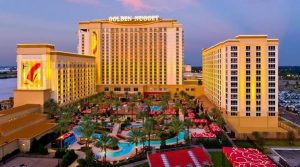
Tequalla Randle, Individually and as Next Friend of C.R., Christina J. Randle, The Estate of Julian Randle, Jaylain Randle, and Rochelle Randle v. Golden Nugget Lake Charles, LLC (No. 14-24-00595-CV; October 27, 2026) arose from a visit to a Louisiana casino that resulted in a fatality. Plaintiff and her husband, Galveston residents, visited the Golden Nugget Charles Hotel and Casino in Lake Charles. After drinking at the bar inside the asino, Plaintiff’s husband was seen by a security guard exiting the parking garage and appearing confused. The husband entered a bathroom, so the guard left. A little later, a Golden Nugget employee saw him on the second floor of the parking garage, standing near a vehicle naked from the waist down. When Golden Nugget employees approached him, he ran away, jumped over a concrete barrier in the garange, ran toward the edge of the roof, and went over the edge. The 25-foot fall resulted in the husband’s death from his injuries. Plaintiff filed suit, alleging negligence. Defendant filed a combined no-evidence and traditional MSJ. The trial court granted the motion. Plaintiff appealed.
In an opinion by Justice Hart, the court of appeals affirmed. Defendant argued that it had immunity under Louisiana’s dramshop law. The statute “provides absolute immunity to vendors and social hosts who serve alcoholic beverages to a person over the age for lawful purchase thereof” (citations omitted). Immunity for bar owners applies if: “(1) the bar owner holds a permit to sell alcoholic beverages, (2) the bar owner or its personnel served alcoholic beverages to a person over the lawful drinking age, (3) the purchase suffered and/or caused another to suffer an injury off the premioses, and (4) the injury was caused by the purchaser’s intoxication.” Decedent, however, was on Golden Nugget’s premises when he fell and was injured. A fact issue thus existed as to whether the immunity applied, so if the trial court granted summary judgment on that basis, it was error.
In the alternative, Defendant argued that there was no evidence that its actions proximately caused Decedent’s death because there was no evidence that Golden Nugget took any affirmative acts to increase the peril to Decedent. The question boiled down to whether Golden Nugget owed Decedent a duty and, if so, whether it breached the duty. Under Louisiana law, the court must determine: “(1) whether the vendor acted as a reasonable person under the circumstances of the case, and (2) whether the vendor committed any affirmative acts to increase the peril to the intoxicated person.” Plaintiff has to prove that the “(1) the defendant’s affirmative act was a cause-in-fat of the plaintiff’s injuries; (2) the defendant’s affirmative act was a legal cause of plaintiff’s injuries; and (3) plaintiff incurred actual damages.” In short, Plaintiff had to prove Golden Nugget’s affirmative negligent act because the statute provides “that in no case will the serving of alcohol be held as proximate cause of a tort in which alcohol was involved.”
Plaintiff claimed that the Golden Nugget security guard failed to escort Decedent to his room after seeing him exit the bar in an intoxicated state. But a failure to act “is not an affirmative act.” Plaintiff didn’t produce any evidence that Golden Nugget did anything to increase the chances that Decedent would fall off the parking garage. The court thus affirmed the trial court.