 The Amarillo Court of Appeals has held that a plaintiff who wanted to represent clients in probate court without bothering to obtain a law license does not have standing to sue state and local officials, challenging the constitutionality of that requirement.
Levi Rudder v. Curtis Parrish, County Judge of Lubbock County; Texas Supreme Court, Through Nathan L. Hecht, as Chief Justice; Unknown Number of John and Jane Does (No. 07-25-00170-CV; April 7, 2026) arose from a pro se lawsuit challenging Lubbock County’s prohibition of non-attorneys representing estates and other parties in probate court. Plaintiff, seeking to represent parties in probate court without a law license and to run for a seat on the Texas Supreme Court, sued the Lubbock County Judge and former Chief Justice Hecht and others complaining about the constitutionality of statutes and rules governing the practice of law. Defendants filed pleas to the jurisdiction, which the trial court granted. Plaintiff appealed.
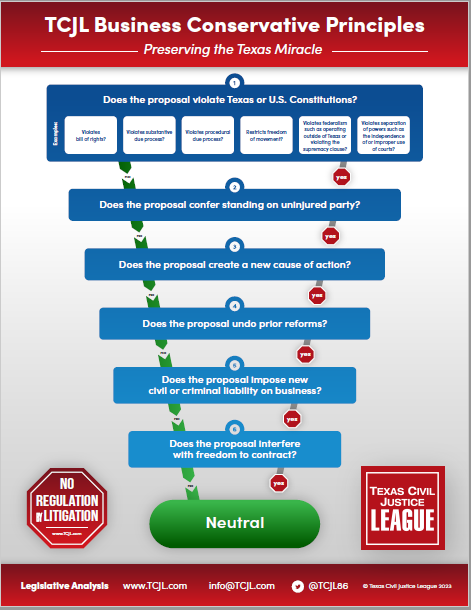
In an opinion by Justice Yarbrough, the court of appeals affirmed. The court interpreted the issue as one of standing, requiring an injury in fact traceable to the defendant and redressable by a court. Plaintiff alleged that he was injured because he was “denied the ability to practice law due to the reliance on the rules promulgated by the Justices of the Supreme Court.” But, as the court observed, “[t]he ability to practice law is not a legally protected interest” (citations omitted). Without any “legitimate entitlement” to a law license, Plaintiff can have no injury from being prohibited to practice the profession.
Plaintiff also failed to show that his “injury” could be traced to actions taken by the Lubbock county judge, who “has no discretion or authority to allow unlicensed law practice, making the requested relief ineffective.” That job belongs to SCOTX. Further, Plaintiff didn’t establish that the Chief Justice did anything to him, much less act ultra vires in doing his job. Finally, because Defendants had immunity (and judges have absolute immunity), the courts lacked subject matter jurisdiction and couldn’t redress the claim in any event.