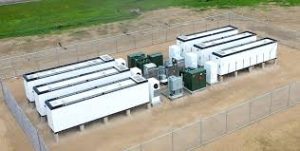
 The Austin Court of Appeals has reversed a trial court order dismissing a negligent nuisance claim against landowners who leased property to a subsidiary of Samsung for construction of a battery energy storage system.
Jim Clements, Guadalupe Gutierrez, Cynthia Gutierrez, and Carolyn Lehmann v. Jason McBroom, Holly McBroom, Linda McBroom, William Michael McBroom, Kevin Patrick McBroom, and Melissa Jo McBroom (No. 03-25-00442-CV; April 9, 2026) arose from a dispute between landowners over the construction of a 200-megawatt battery energy storage system (BESS). Plaintiffs filed an original petition for permanent and temporary injunction and damages in an effort to temporarily halt construction on Defendants’ property. They contended that the project should be halted until a court-approved hazard mitigation plan had been implemented. They further asserted a claim against Defendants for private nuisance based on negligence and sought damages for loss of property value, increased insurance costs, and loss of use and enjoyment of the property. Defendants filed a Rule 91a motion to dismiss, arguing that Plaintiffs’ private nuisance claim was not cognizable under Texas law. The trial court granted the motion. Plaintiffs appealed.
In an opinion by Justice Crump, the court of appeals reversed and remanded. Beginning the analysis with Crosstex N. Tex. Pipeline, L.P. v. Gardiner, 505 S.W.3d 580 (Tex. 2016), the court observed that SCOTX defined a private nuisance as “a condition that substantially interferes with the use and enjoyment of land by causing unreasonable discomfort or annoyance to persons of ordinary sensibilities attempting to use and enjoy it.” SCOTX added that intentional nuisance, negligent nuisance, and strict-liability nuisance might support liability. Plaintiffs pleaded negligent nuisance based on breach of Defendants’ duty to lease their land for construction of the battery system without adequate safety and environmental safeguards.
But does the alleged nuisance “substantially interfere” with Plaintiffs’ use and enjoyment of their property? This might involve physical damage to property, economic harm to the property’s market value, harm to Plaintiffs’ health, or psychological harm to Plaintiffs’ peace of mind. Here Plaintiffs alleged that Defendants leased their property to a subsidiary of Samsung that has applied for a tax abatement from Fayette County. Though the project had not commenced construction, Plaintiffs alleged that they suffered from psychological harm should it be built and operated in the absence of injunctive relief.
The court compared this case to a recent federal district court decision holding that, facing a Rule 12(b)(6) motion to dismiss, plaintiffs sufficiently alleged that an anticipated nuisance would be caused by defendants’ proposed solar farm. Taking this cue, the court ruled that Plaintiffs sufficiently alleged facts that, if proven, would support their request for injunctive relief to redress a “speculative nuisance that plausibly will be caused by [Defendants’] and [the contractor’s] imminent actions that will likely cause irreparable harm for which they would have no adequate remedy at law. Plaintiffs thus alleged a legally cognizable claim, and the court remanded for further proceedings.