 As we have previously reported, legislation has once again been filed this session that eliminates the current 30-year statute of limitations in suits for personal injury arising from sexual offenses against. It appears that one or more of these proposals may be heard in House Judiciary next week.
These proposals have bipartisan appeal and seek to address probably the most heinous conduct imaginable in our society. According to the Centers for Disease Control and Prevention, approximately 1 in 4 girls and 1 in 6 boys experience child sexual abuse. Let that number sink in for a minute before you read further. As the CDC observes, children are frequently in no position to report abuse until much later, if at all, so the numbers substantially underrepresent the real prevalence of the problem. In short, child sexual abuse in the United States is not only an epidemic, it’s a pathological condition.
The problem doesn’t stop with childhood. Women who have suffered sexual abuse as children are 2-13 times more likely to experience sexual violence victimization in adulthood, and both men and women who were abused are twice as likely to be victimized by non-sexual intimate partner violence. More than a third of women who were sexually assaulted before age 18 will be assaulted again in adulthood. As if all this isn’t sickening enough, consider the fact that the younger the victim, the more likely that a family member committed the abuse. Child abuse statistics compiled by the Rape Abuse Incest National Network, family members account for half the cases of molestation of children 6 and under and nearly one-quarter of sexual assaults against children age 12-17. In a staggering 93% of the cases, the victim knows the perpetrator. In 96% of the cases, the perpetrators are male, more than three-quarters of whom are married men.
These facts are hard to stomach. What’s even harder to stomach is the fact that the family—the institution we entrust with the care and nurture of the children who we rely upon to carry on our collective values and way of life in the future—is at the very center of the crisis. And just one step beyond the family we find an active body of sexual predators with close ties to and in positions of trust or authority over our children: relatives and family friends, clergy and youth leaders, scoutmasters and teachers. While policymakers focus a lot of effort and attention on the efforts of strangers, such as online predators, to “groom” our children, the vast majority of the problem is much closer to home and does not rely on technological means, but actual physical and moral proximity. Sexual abuse is a scourge that begins in the home and spreads outward like a poisonous miasma, leaving those it touches traumatized and broken in ways that can never be fully fathomed or remedied.
Unfortunately, the political and ideological framework for even discussing this social and public health catastrophe clouds and distorts the conversation we ought to be having as a whole society. Blaming somebody else, whether social media platforms, library books, video games, film and television, multiculturalism, secularism, or what have you, mistakes the symptoms for the problem. The problem is in the mirror. We are all responsible for it, both personally and collectively, and there’s plenty of blame to go around.
We are talking primarily about adult men here, most of whom are married and almost all of whom are personally acquainted with the children they victimize. That’s the fact, and it does more harm than good, especially to the victims, to divert the gaze elsewhere. It does no good to talk about “evildoers” when child sexual abuse is so pervasive and so intertwined with family life in our country that talking about “evil” has become a strategy of avoidance rather than one of confrontation. Until we face up to the problem where it lives—in our households, places of worship, youth organizations, and wherever else primarily male adults come into close contact and familiarity with children—nothing meaningful is likely to happen. The torrents of commentary pouring forth from politicians and pundits on the subject has not, and will not, make one bit of difference. The problem existed long before the advent of the culture wars, and, unless we address it head on, it will survive them.
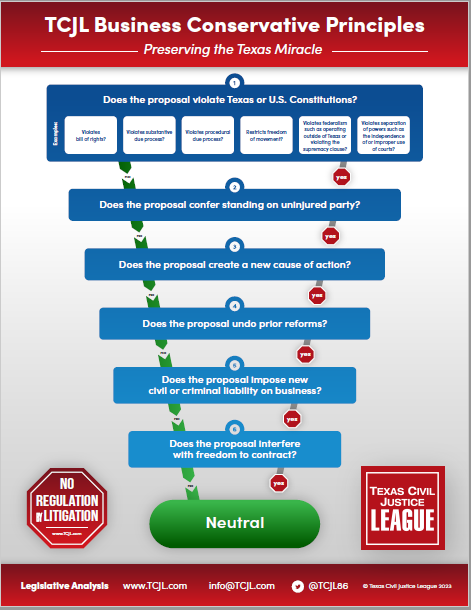
By now you’re wondering what all this has to do with statutes of limitations and why we care about the bills that eliminate them. First, we care about them because they represent a cry in the wilderness about a crisis that threatens to destroy our society from the inside out. This crisis is everybody’s problem, and even the best business climate on the planet means nothing if we continue to fail our children so miserably. Second, we care about them because they target a corner of the civil justice system as a means of providing a remedy for child sexual abuse, which should provoke a robust discussion of whether and in what context it is appropriate to deploy that system as part of a comprehensive approach to the crisis. We think that the bill authors want to have that discussion, and we applaud and honor them for planting a flag in the ground and inviting the discussion to happen. While our specific concerns about the proposals go to their due process implications, we fully recognize that judicial remedies can and should be available to victims in a meaningful and sustainable way.
Nobody can operate for long in an environment in which so many are harmed by the people they should trust and look up to. We don’t have the answers. But we are not afraid of being part of a broader, inclusive, and nonpartisan collaboration aimed at finding them.