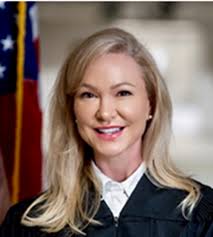
Judge Melissa Andrews
In one of those superb features of the Business Court—a Joint Advisory on Early Legal Issues—the court has disposed of two of Plaintiffs’ theories alleging joint venture and breach of fiduciary duties.
Enosis Investments, LLC, et al. v. Brett Jensen, et al.; Brett Jensen, et al. v. George Lake, et al. (2026 Tex. Bus. 19; April 23, 2026) arose from a dispute over the acquisition and management of a mixed-use development in Travis County. In May 2021, various parties formed several LLCs to acquire, own, and manage different pieces of the development (e.g., club LLC, marina LLC, residential LLCs). These “shared LLCs” are governed by written company agreements and are co-managed by Enosis (owned by Lake) and Braverman (owned by Jenson). Enosis has the authority to break a deadlock between the parties. The parties fell out, however, and Plaintiffs filed suit alleging that Jensen, Braverman, and Southfork breached fiduciary duties to Enosis, Lake, and the shared LLCs. The parties filed a Joint Advisory on Early Legal Issues to narrow the issue to whether Jensen, Braverman, and Southfork owed fiduciary duties to Lake, Enosis, and the shared entities.
In an opinion by Judge Andrews, the court answered the question in the negative. Plaintiffs argued that Defendants owed fiduciary duties to Enosis and Lake because the development was a joint venture among them and to the shared LLCs “by virtue of managerial positions, or control, or both.” First, the court determined that the pleadings didn’t support formation of a joint venture. Joint venture requires “(1) an express or implied agreement to engage in a joint venture, (2) a community of interest in the venture, (3) an agreement to share profits and losses from the enterprise, and (4) a mutual right of control or management of the enterprise.” But although Plaintiffs pleaded facts supporting three of those prongs, they didn’t allege that the parties “ever agreed to share profits and losses among Jensen, Braverman, Southfork, Enosis, and Lake. No profit and loss share agreement, no joint venture. Additionally, the court found that the LLC agreements allocated control over the assets and sources of income and expenses among the shared LLCs, not the alleged joint venturers. In any event, the court noted, the LLCs agreements unambiguously disclaimed the intention to create a joint venture or partnership, so the issue was foreclosed from the get go.
Turning to whether Jensen, Braverman, and Southfork owed fiduciary duties to the shared LLCs, the court started the analysis with Braverman. The shared LLCs, the court wrote “are manager-managed LLCs under Texas law. Defendants agree that managers of such LLCs generally owe fiduciary duties to the LLC,” so they didn’t dispute that Braverman, as a co-manager, owed a duty to the shared LLCs. Southfork, on the other hand, was merely a member of each shared LLC but didn’t manage any of them. Though an LLC agreement can assign management to members, these did not. Additionally, Plaintiffs didn’t allege any specific actions taken by Southfork on behalf of the shared LLCs such as to create a duty.
As to Jensen, he wasn’t a member or manager of any of the shared LLCs, simply president and “controlling member” of Braverman. Plaintiffs argued that since Braverman owed fiduciary duties, Jensen did, too. But as the court observed, “Plaintiffs have not identified, and the Court has not discovered, any basis for imposing a fiduciary duty between the officers and shareholders of a corporation and an LLC in which the corporation is a manager.” If the parties had wanted to do that, they could have contracted for it. Plaintiffs, moreover, did not plead a corporate veil-piercing theory, nor did they plead any facts to support one. While Jensen could certainly be held liable for his own tortious conduct, that issue wasn’t before the court.