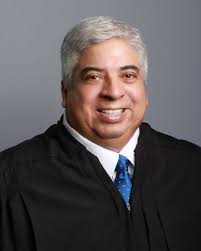
Justice Aron Peña
The Corpus Christi Court of Appeals has granted a petition for writ of mandamus, finding that the trial court abused its discretion in allowing a defendant to file several third-party petitions and vacating an imminent trial date in a case that had already been pending for five years.
In re Nancy Vasquez and Bolivar Building and Contractors, LLC (No. 13-26-00044-CV; April 23, 2026) arose from a business dispute between business partners who disagreed on who owned the business. Plaintiffs Vasquez and BBC sued Randall Bolivar and Bolivar Business Conglomerate alleging that Vasquez was the sole owner of BBC and its assets, that Bolivar incorporated the company in 2006 but did not make capital contributions or operate the company until 2007, and that she, Bolivar, and two others executed an operating agreement stating that she was the only party who had made capital contributions and owned 100% of BBC. She further alleged that when Bolivar was convicted of murder in 2009, he resigned from the company. Later, however, he claimed ownership of BBC and its assets in fraudulent documents. Vasquez sued for declaratory relief, recission, purchase money resulting trust, fraud, slander to title, and trespass to try title. Bolivar counterclaimed on a variety of theories.
Many years passed, until in November 2025 Bolivar filed a motion for leave to file third-party petition against several third-party defendants, including various members of Vasquez’s family. At that time, trial was set for March 2026. After a hearing, the trial court eventually granted the motion. Plaintiff sought mandamus relief.
In an opinion by Justice Peña, the court of appeals granted relief. There was quite a lot of gamesmanship in which Bolivar attempted to block the third-party defendants from participating in the mandamus proceeding. The court brushed these aside with, it appears to us, thinly veiled disgust. Getting to the merits, the court first reviewed the requirements of TRCP 174 (consolidation of cases with common issues of law and fact)and § 33.004, CPRC (joinder of responsible third parties) and found both inapplicable, the first because there were no cases to be consolidated and the second because Bolivar sought to impose direct liability on third-party defendants. Bolivar then argued that Rule 38, which allows “a defending party, as a third-party plaintiff, [to] cause a citation and petition to be served upon a person not a party to the action who is or may be liable to him or plaintiff for all or part of the plaintiff’s claim against him.” This didn’t work either because Bolivar didn’t allege that the designated third-party defendants were liable for all or part of Vasquez’s and BBC’s claims against him, but rather were directly liable to him. The rule didn’t apply.
As to Rules 37, 39, and 40, which govern joinder, Plaintiffs argued that granting Bolivar’s motion for leave after several years of back and forth in the case was an abuse of discretion. Bolivar, among other things, alleged that the motion was timely and that the designated individuals were indispensable parties. Unfortunately for Bolivar, who again contended that the designated individuals were directly liable to him, Texas law holds that “if a plaintiff can proceed against any one defendant separately, the other defendants are not inseparable parties” (citation omitted). As to the timing of the motion, the court observed that the case had been pending since September 2021, had had 13 different trial settings, and Bolivar filed his motion for leave in November 2025. When the trial court vacated its March 2026 trial setting, it once again delayed the trial. Given the circumstances of the case, the court found that delay to be unreasonable and an abuse of discretion. It conditionally granted the writ.