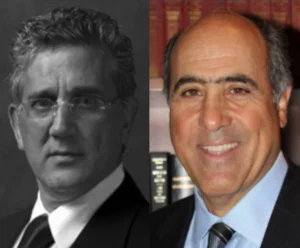
C. Gregory Shamoun and Stephen Khoury
The Dallas Court of Appeals has granted mandamus relief in a fraud case in which the trial court set aside a substantial jury award and ordered a new trial based on an improper jury argument by two attorneys who had previously been chastised by the 5th Circuit for similar conduct.
In re Pillar Income Asset Management, Inc., et al. (No. 05-25-00205-CV; January 14, 2026) arose from a Texas Uniform Fraudulent Transfer Act claim that netted a $48.75 million judgment. The real parties in interest, Renate Nixdorf GmbH & Co. KG (RNK) and Watercrest Partners, L.P. (WP), obtained the judgment against Eric Brauss and Christine Brauss Martin, who owned an interest in TRA Midland. Pillar was sued after Brauss and Martin allegedly assigned their interest to MRI for no reasonably equivalent value, and a series of transactions funneled the proceeds to Pillar. Real parties alleged that the asset transfers were designed to hinder, defraud, and circumnavigate the satisfaction of prior judgments against Brauss and Martin. They filed a lawsuit, and a decade elapsed before trial commenced. Todd Harlow was counsel for the real parties, while Stephen Khoury represented TRA Midland, TRA Apt, and MRI, while Gregory Shamoun represented most of the relators and most of the subsequent transferees.
Drama ensued during trial as tense exchanges unfolded between counsel and witnesses, which resulted in several admonishments by the trial court. During deliberations the jury sent out four notes and eventually returned a mixed verdict to the dissatisfaction of the real parties, who moved for judgment notwithstanding the verdict and for a new trial. A judgment was never entered. Then, the US 5th Circuit decided Clapper v. American Realty Investors, Inc., 95 F.4th 309 (5th Cir. 2024), in which the court reversed the trial court’s take-nothing judgment based on an improper jury argument by Khoury and Shamoun. Utilizing this adverse ruling, real parties filed another motion for a new trial, citing the decision in Clapper and attempting to link the incurable jury argument to their lingering case. The trial court set aside the jury’s verdict and granted a new trial. The trial court found that Khoury and Shamoun engaged in personal attacks on Harlow, calling him a “silver tongued lawyer,” attacked Real Parties’ expert, calling him “bought and paid for” and willing to “say anything” for the right price, and accused Real Parties’ corporate representatives for bringing claims in bad faith. According to the trial court, Khoury and Shamoun also referenced matters outside the record, offered their personal opinions on witness credibility, and appealed to local and religious biases. Relators sought mandamus relief on the basis that the challenged arguments of counsel were not incurable and that the trial court abused its discretion by granting a new trial.
In an opinion by Justice Lewis, the court of appeals conditionally granted the writ. “Incurable argument is rare,” the court began. “It occurs in those instances when argument is ‘so inflammatory and prejudicial’ that its harmfulness is incurable” (e.g., calling jurors Nazis, racial prejudice, extreme attacks on opposing parties and witnesses) (citations omitted). Still, even if a jury argument is harmful, it does not invariably result in a new trial. Instead, the court will assess whether the argument was “reasonably calculated to cause such prejudice to the opposing litigant that a withdrawal by counsel or an instruction by the court, or both, could not eliminate the probability that it resulted in an improper verdict” (citations omitted). This standard requires the court to consider the whole trial, subject to a presumption “that probable harm from improper jury argument can be remediated by retraction of the argument or curative instruction from the judge” (citations omitted).
Regarding the attacks on Harlow, the court determined that the language used, including “hocus pocus,” “fantasy” and “sleight of hand,” fell short of irreparably prejudicing the Real Parties. Most of these statements were made by Khoury, whose client was found liable for $25 million. The fact that these arguments were unsuccessful reflected that the evidence outweighed the improper arguments. Additionally, Texas law does not rule out counsel making an inference that a case was lawyer-driven, as long as the alleged behavior is supported by evidence. Id. Relevant here was RNK’s principal admitting that she lacked any personal knowledge in support of the fraud claims levied against the subsequent transferees. Though Khoury and Shamoun might have been slinging mud by “suggesting that real parties’ counsel was being deceptive or dishonest and misleading the jury” didn’t constitute “the kinds of extreme and inflammatory remarks that courts have found to be incurable.” was far less injurious. Considering the record as a whole, the court determined that the trial court abused its discretion by granting a new trial for this reason.
The court found the attacks on the Real Parties’ expert similarly curable. At trial, Khoury and Shamoun dubbed the expert a “professional witness” who would say anything for money, accompanied by “finger waving” and badgering by the defense counsel. Relators argued that this witness was treated differently, but the treatment was warranted because Grace was evasive. The court noted that no authority points to badgering the witness as being an incurable jury argument. “Even assuming [Khoury’s and Shamoun’s] comments (and behavior) with respect to [the expert] were improper,” the court observed, “we cannot agree that they were so extreme that a ‘juror of ordinary intelligence could have been persuaded by that argument to agree to a verdict contrary to that to which he would have agreed but for such argument.” The trial court abused its discretion here as well.
Next came the attacks on the Real Parties’ two corporate representatives. Real Parties contended that Khoury blamed the manager of Watercrest for filing the lawsuit in bad faith based on a “wild assumption”.” The real Parties objected, and the trial court sustained. Khoury further added that Harmel “abused” the process by filing suit immediately prior to the running of the statute of limitations. Relators argued that these statements were not extreme enough as to be incurable. The court agreed.
The fourth rationale for a new trial involved Khoury’s and Shamoun’s closing argument, which referenced matters outside the record, including Shamoun’s charitable work building infrastructure in Africa and deposition testimony that hadn’t been introduced into evidence. With regard to the Africa tangent, the court determined that there were no appeals to racial prejudice or personal attacks on the opposing party, and were thus curable. The deposition testimony, which concerned TCI’s liability for the fraudulent transfers, apparently had no effect on the jury’s verdict because the jury found MRI liable for Brauss’s conduct, not TCI. The exclusion of this evidence was allegedly intentionally misconstrued by the counsel to support a dishonest argument. Khoury’s maneuver could have been addressed by an instruction from the trial court to disregard it, therefore it wasn’t incurable. The trial court abused its discretion in granting a new trial on this basis.
Similarly, the court determined that the trial court abused its discretion in granting a new trial based on Khoury’s and Shamoun’s insertion of personal opinions, including on the veracity of witnesses, into their closing argument. Real Parties failed to object to these statements at trial, and, in any event, there was nothing wrong with counsel commenting on the credibility of witnesses. The same went for the trial court’s finding that a new trial was justified because Khoury’s and Shamoun’s argument appealed to local bias, specifically Khoury’s use of the phrase “Texas English.” An appeal to local prejudice or unity is usually considered a curable impropriety for which an objection must be made. Ramsey v. Grizzle, 313 S.W.3d 498, 512 (Tex. App.—Texarkana 2010, no pet.). Since Real Parties failed to object or request a curative instruction, and even if Khoury was attempting to appeal to local bias, the problem was easily curable.
Finally, Shamoun’s profession of his Catholic faith during closing did not constitute an improper appeal to religious bias. The court noted that not every statement concerning religious affiliation constitutes an incurable argument. Extreme attacks, charges of perjury, or inflammatory epithets were not involved. In this case, Shamoun mentioned his Catholic upbringing and belief might give rise to a finding of harm justifying a new trial, counsel’s allusion to his religious belief in the benefits of “telling the truth” did not rise to that level and could in any event have been cured. And, again, Real Parties didn’t object at trial.
Justice Lewis devoted the remaining portion of the opinion on the effect of Clapper v. American Realty Investors, Inc., 95 F.4th 309 (5th Cir. 2024) on this proceeding. In Clapper, the 5th Circuit set aside a jury’s take-nothing judgment and granted a new trial based on a prejudicial argument by the same lawyers, Khoury and Shamoun. The near-cartoonish violations of the dignity, order, and decorum of court proceedings included but was not limited to: throwing a box of tissues at the opposing counsel; pontificating on “kicking his butt” and ‘whooping his a–”; referring to Clapper as a “financial pimple”; and referring to Clapper’s expert witness as a “paid prostitute from Michigan.” Based on these and other comments, the 5th Circuit found that the improper conduct, “considered collectively, extend[ed] far beyond permissible hyperbole or ‘expressive language,’ and were designed to bias the jury against Clapper and his counsel.” While the attorneys’ conduct in the present case was unprofessional, the court of appeals observed, their comments in Clapper were “extreme.” The court noted that the jury in Clapper entered a take-nothing judgment in favor of Khoury and Shamoun’s clients, as opposed to the mixed judgment returned in this case. The record thus supported the conclusion that the jury deliberately and conscientiously considered the case and did not place undue weight on the improper remarks of counsel.
The court conditionally granted mandamus relief and ordered the lower court to vacate the new trial motion. While not condoning the conduct of the Relator’s trial counsel, the court did not find it prejudicial to Real Parties to the degree necessary for a new trial.
TCJL Legal Intern Satchel Williams researched and prepared the first draft of this article.