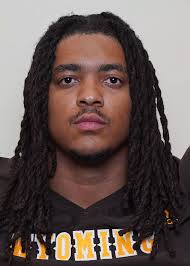
Chandler Donaway
The Dallas Court of Appeals has reversed and remanded a health care liability claim brought against Texas A&M-Commerce and the TAMU System stemming from a football injury.
Texas A&M University-Commerce and Texas A&M University System v. Chandler Donaway (No. 05-25-00481-CV; March 30, 2026) arose from an ankle injury sustained by a student athlete on TAMU-Commerce’s football team. After being treated for several weeks for what the team’s orthopedic surgeon, Plaintiff alleged that the surgeon and Texas A&M told him “that he would not receive an MRI because it could reveal a season-ending injury and that the treatment plan of periodic pain killers and steroid shots would allow him to keep playing for the remainder of the season.” After playing on the injured ankle for several weeks and after the season ended, an MRI revealed that Plaintiff had torn ligament in his ankle. At that point, the surgeon and TAMU recommended plasma injuection therapy. When it didn’t reduce Plaintiff’s pain, the surgeon and TAMU scheduled him for surgery. After the operation, Plaintiff developed a bone infection, and the surgeon’s treatments allegedly caused irregular kidney function and further hospitalization. Plaintiff switched physicians and was told the surgery was botched. He was also told his chances of playing football again were minimal.
Plaintiff filed suit against the surgeon, TAMU, and others, alleging negligence and gross negligence. Three months after filing suit, Plaintiff served an expert report and CV of an orthopedic surgeon in accordance with § 74.351, CPRC. Defendants objected to the report on the basis of inadequacy and moved for partial dismissal with prejudice. The trial court denied the motions to dismiss. Defendants TAMU-Commerce and TAMU System sought interlocutory relief.
In an opinion by Justice Rossini, the court of appeals reversed and remanded to the trial court. Defendants argued that the report failed to address applicable standards of care, breach, and causation. The report stated that “‘Texas A&M and its employees’ used tangible personal property and medication on [Plaintiff] as a part of his ankle therapy.” These, the court opined, were “not statements regarding the standard of care.” It further “neither explain[ed] what an ordinary prudent health care provider, whether athletic trainer or even some other professional working for the team or under the direction of a physician, would do to treat or rehabilitate an ankle injury like [Plaintiff’s] nor provide[d] any ‘specific information’ as to actions or inactions [Defendants] were expected to take following [Plaintiff’s] ankle injury, his surgery, or at any point in the timeline of [Plaintiff’s] care.” Additionally, the report did not “include sections related to [the expert’s] familiarity with the relevant standard of care and breaches of that standard.” Instead, the report was directed to the surgeon’s “actions or inactions,” not the University’s. Consequently, it failed “to identify the standard of care for each defendant and explain how each defendant’s breach of the standard of care caused the injury” (citation omitted).
Finally, the report didn’t address the “how” and “why” that the alleged uses of Defendants’ tangible personal property caused the injury. Instead, the expert offered a conclusory assertion that they did. The only statement in the report that referred to the University’s actions suggested that when traveling on the team bus, Plaintiff should have had a “proper harness, and measures in place to protect” Plaintiff’s injury, the absence of which “more likely than not” worsened his injury. The court observed that negligent transport was not an appropriate topic for a Chapter 74 expert report. Since the report in no way described the appropriate standard of care applicable to the University, there could be no question of an identifiable breach or chain of causation. The court ruled that the report was inadequate and did not “represent an objective good faith effort to comply with the statutory definition of an expert report ….” The trial court abused its discretion in denying the University’s challenge to the report.
Plaintiff argued that, in the event the court found the report deficient, the case should be remanded to the trial court for an opportunity to cure the report’s deficiencies. § 74.351(c). The court agreed and sent the case back to the trial court for consideration of whether to grant Plaintiff the 30-day extension or dismiss the health care liability claims against the University with prejudice.