 As we reported numerous times this session, legislation was proposed and ultimately enacted imposing civil liability on a vaccine manufacturer for advertising a vaccine if the advertised vaccine “causes harm or injury to the individual.” HB 3441 directs a court to award a prevailing claimant actual damages and court costs and attorney’s fees.
Setting aside the question of whether HB 3441 is good public policy, perhaps a more pertinent question to ask (since the Legislature has made that decision) is whether the bill, if signed into law, can withstand a federal constitutional challenge. Since the mid-1970s, the United States Supreme Court has recognized that commercial speech is constitutionally protected under certain circumstances.
The Court has defined “commercial speech” as speech that proposes a commercial transaction. Board of Trustees of the State University of New York v. Fox 492 U.S. 469, 482 (1989). For example, in Bolger v. Youngs Drug Products Corp., 663 U.S. 60 (1983) the Court struck down a federal statute that prohibited a manufacturer of contraceptives from mailing unsolicited advertisements promoting its products to the public. It found that the advertisements constituted protected commercial speech, particularly since the advertisements in question combined three aspects: they proposed a commercial transaction, referred to a specific product, and the publisher had an economic motivation for mailing the advertisements. (Bolger at 66-67). The Court concluded that the federal government’s interest in “shield[ing] recipients of mail from materials that they [are] likely to find offense” and (2) “aid[ing] parents’ efforts to control the manner in which their children become informed about sensitive and important subjects such as birth control,” were insufficient to warrant the prohibition. Id. at 71.
Prior to the Bolger decision, the Court, in Virginia State Board of Pharmacy et al. v. Virginia Citizens Consumer Council, 425 U.S. 748 (1976), struck down a Virginia State Board of Pharmacy rule that prohibited a licensed pharmacist from advertising prescription drug price information to consumers. A pharmacist who violated this rule could have his or her license revoked or suspended for “unprofessional conduct.” A Virginia consumer group challenged the statute that authorized the Board to adopt the rule on the basis that “the First Amendment entitles the user of prescription drugs to receive information that pharmacists wish to communicate to them through advertising and other promotional means, concerning prices of such drugs.” 425 U.S. at 754.
First, the Court rejected the state’s argument that the First and Fourteenth Amendments did not protect “commercial speech.” To the contrary, a “particular consumer’s interest in the free flow of commercial information … may be as keen, if not keener by far, than his interest in the day’s most urgent political debate…. Those whom the suppression of prescription drug price information hits the hardest are the poor, the sick, and particularly the aged. Id. at 763. Moreover, the Court continued, “[a]dvertising, however tasteless and excessive it sometimes may seem, is nonetheless dissemination of information as to who is producing and selling what product, for what reason, and for what price. So long as we preserve a predominantly free enterprise economy, the allocation of our resources in large measure will be made through numerous private economic decision. It is a matter of public interest that those decisions, in the aggregate, be intelligent and well informed. To this end, the free flow of commercial information is indispensable.” Id. at 765.
The Court recognized that the state has a “strong interest” in “maintaining a high degree of professionalism on the part of licensed pharmacists.” Id. at 766. According to the state, “[p]rice advertising … will reduce the pharmacist’s status to that of a mere retailer.” Id. at 768. But, as the Court stated, “the States protectiveness of its citizens rests in large measure on the advantages of their being kept in ignorance.… It affects them only through the reactions it is assumed people will have to the free flow of drug price information….The more painstaking pharmacist is also protected but, again, it is a protection based in large part on public ignorance.” Id. at 769.
Instead of keeping citizens in a state of ignorance, the Court went on, “[t]here is, of course, an alternative approach. That alternative is to assume that this information is not in itself harmful, that people will perceive their own best interests if only they are well enough informed, and that the best means to that end is to open the channels of communication rather than to close them…. It is precisely this kind of choice, between the dangers of suppressing information, and the dangers of its misuse if it is freely available, that the First Amendment makes for us.” Id. at 770. The Court determined that “[w]hat is at issue is whether a State may completely suppress the dissemination of concededly truthful information about entirely lawful activity, fearful of that information’s effect upon its disseminators and its recipients…. [] we conclude that the answer to this one is in the negative.” Id. at 773.
A few years after the Virginia decision, the Court decided another commercial speech case, Central Hudson Gas & Electric Corp. v. Public Service Commission, 447 U.S. 557 (1980). This case arose from a New York prohibition on an electric utility from advertising to promote the use of electricity (this regulation was imposed in the name of conserving electricity). The Court struck down this regulation as well, holding that although the state’s interest in energy conservation was “clear and substantial,” it did not “provide a constitutionally adequate reason for restricting protected speech” because “[t]he link between the advertising prohibition and appellant’s rate structure is, at most, tenuous.” 447 U.S. at 569. The Court left open whether “more limited regulation of [the utility’s] commercial expression” might have been adequate to protect the state’s interest, such as some restriction on “the format and content of [the utility’s] advertising.” Id. at 570-571.
Central Hudson is a seminal decision in First Amendment jurisprudence concerning commercial speech. It’s four-part test provides that, in order to be protected: (1) commercial speech “must at least concern lawful activity and not be misleading”; (2) the government’s interest “to be served by the restriction on commercial speech is substantial”; (3) if the answers to (1) and (2) are yes, the regulation must directly advance the governmental interest; and (4) the regulation “is not more extensive than is necessary to serve that interest.” Id. at 557. Central Hudson has subsequently been applied to invalidate a city’s prohibition on distributing commercial handbills through freestanding newsracks located on city property, total bans on lawyer and CPA advertising, a ban on casino advertising in a state where such gambling was legal, a state ban on truthful information about liquor prices, and state restrictions on pharmacies and data-miners selling or leasing information on the prescribing behavior of doctors.
It’s important to note that more recent SCOTUS decisions have cast doubt on the Central Hudson test. Specifically, in Sorrell v. IMS Health, Inc., 564 U.S. 552 (2011), the Court observed that “[t]he State seeks to achieve its policy objectives through indirect means of restraining certain speech by certain speakers—that is, by diminishing detailers’ (i.e. marketing specialists employed by pharmaceutical manufacturers) ability to influence prescription decisions. Those who seek to censor or burden free expression often assert that disfavored speech has adverse effects. But the ‘fear that people would make bad decisions if given truthful information’ cannot justify content-based burdens on speech.” 564 U.S. at 577. In an earlier case, Greater New Orleans Broad, Ass’n, Inc. v. United States, 527 U.S. 173 (1999) (Thomas, J. concurring), Justice Thomas opined that, in cases “in which the government’s asserted interest is to keep legal users of a product or service ignorant in order to manipulate their choices in the marketplace, the Central Hudson test should not be applied because such an interest is per se illegitimate.” 527 U.S. at 197. Such decisions point towards a stricter scrutiny of state restrictions on commercial speech than the Central Hudson test affords.
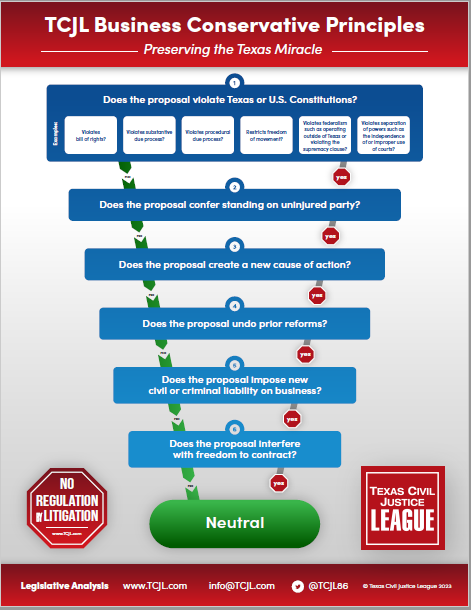
This is the legal climate into which HB 3441 has been born. Though we would never try to predict what courts might do, looking at the bill in light of Central Hudson might be instructive. By its terms, the bill penalizes a vaccine manufacturer from advertising a lawful product. It doesn’t speak to “misleading” advertising, but any “advertising” (with a few specified exceptions), so the first prong of the test would appear to be met. The next question is whether the government’s interest in restricting vaccine advertising is “substantial.” In view of Bolger, that conclusion is questionable. We’re not sure precisely what government interest the state is trying to assert here (ban vaccines that have side effects (which is all of them)? suppress information about vaccines so that people won’t take them? protecting children from vaccines? protecting adults from vaccines? stop manufacturers from making vaccines?) Given the fact that SCOTUS has struck down bans on contraceptive advertising and drug price advertising by pharmacists, and that physician advertising for services such as cosmetic surgery, pain management, orthopedic surgery, Lasik and cataract surgery, and other services floods the market, this “substantiality” of the state’s interest is dubious at best.
But even assuming that the state’s interest is substantial enough to meet the second prong of the test, that doesn’t mean the state can do it. The question then becomes whether the restriction (holding manufacturers liable for lawful advertising) “directly advances” that interest. As a side note, federal law already heavily regulates pharmaceutical advertising, including disclosure of potential side effects. So it would seem that HB 3441 is not interested in warning people about vaccine side effects. To the contrary, HB 3441, as we understand it, tries to prevent Texans from hearing about vaccines altogether, including their side effects. As the Court stated in the Virginia case, the alternative to a ban “is to assume that this information is not in itself harmful, that people will perceive their own best interests if only they are well enough informed, and that the best means to that end is to open the channels of communication rather than to close them…. It is precisely this kind of choice, between the dangers of suppressing information, and the dangers of its misuse if it is freely available, that the First Amendment makes for us.” Isn’t this exactly what HB 3441 entails? Of course, it is arguable that if Justice Thomas had his way, HB 3441 might be “per se illegitimate” because it keep[s] legal users of a product or service ignorant in order to manipulate their choices in the marketplace.”
Proponents of the bill will undoubtedly point to the “exceptions” to the term “advertising.” HB 3441 does not apply to discussions between health care providers and patients or “written materials a health care provider provides to a patient concerning a vaccine.” This begs the question of whether a manufacturer who produces such materials has run afoul of the prohibition. After all, isn’t any written material “promotional” in some sense? The second “exception” applies to “posters, decorations, or other materials or promotional items concerning the vaccine that are displayed or made available by a health care facility, health care provider’s office, or other clinical setting.” We understand both of these exceptions to narrow, and significantly narrow, where and under what circumstances an individual can hear about a vaccine. In other words, they control who has the information and the limited number of ways it can be disseminated.
It’s hard to see how this kind of restrictive control of information about a legal product in a free market can possibly stand up to constitutional scrutiny. What if HB 3441 were extended to other products that may have “adverse effects”? Any and all drugs, for certain. Any and all medical procedures, for certain. Think of the adverse effects of chemotherapy or radiation treatment, routinely advertised by cancer treatment facilities, for example. How about air travel? Cars and trucks (a lot more people are killed on road and highways in a year than have adverse reactions to vaccines)? Beer and wine? Weight loss products? Insecticides? Soft drinks? Fast food (or really any food, since anything can cause an allergic reaction)? Cookies? Exercise products (yes, exercising can have adverse effects)? Sports? The list goes on.
We recognize that another argument likely to be made is that HB 3441 doesn’t ban advertising vaccines, it just makes manufacturers pay for adverse reactions. Additionally, we expect to hear that the state doesn’t have anything to do with enforcement, only private litigants. We very much doubt this sort of indirection will be persuasive. No matter how one slices it, HB 3441 creates significant legal consequences for exercising First Amendment rights, which include the freedom of commercial speech. Whether that’s done by direct regulation or indirectly by litigation doesn’t change that fact.
In any event, if it is a foregone conclusion that HB 3441 will be signed into law, it is far from a foregone conclusion that it will survive the first lawsuit.