Reversing a Harris County district court, the Houston [1st] Court of Appeals determined that a lawsuit against the City of Houston arising from an accident between an ambulance and a motorist was barred by sovereign immunity.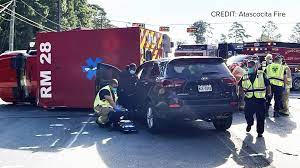
City of Houston v. Martha Vogel and Maria Escalante (No. 01-22-00071-CV) boiled down to the question of whether a Houston Fire Department firefighter and EMT, who was responding to a 9-1-1 emergency call, violated traffic statutes and acted recklessly when he drove through an intersection and was T-boned so violently by plaintiff’s Toyota Tundra truck that the ambulance rolled over. Plaintiffs claimed to have sustained serious injuries and sought more than $2.5 million in damages. The city filed a plea to the jurisdiction, contending that the EMT, the city’s employee, was entitled to official immunity under the Texas Tort Claims Act. Plaintiffs responded that their suit falls within TTCA’s waiver of governmental immunity. The trial court denied the city’s plea. The city appealed.
The court of appeals reversed and rendered in favor of the city. The court’s analysis focused on the construction of the TTCA’s limited waiver of immunity from suits for damages “proximately caused by the wrongful act or omission or the negligence of an employee within his scope of employment,” provided that the property damage, personal injury, or death arises from the operation of a motor vehicle and the employee would be personally liable to the claimant under Texas law. § 101.021(1), CPRC. Even so, the TTCA excludes from the limited waiver: (1) actions of employees responding to an emergency situation if the action complies with applicable laws and ordinances, or, in the absence of such laws or ordinances, if the action is not taken with conscious indifference or reckless disregard for the safety of others; and (2) actions of employees of the public agency responding to a 9-1-1 emergency call, unless the action violates a statute or ordinance. §§ 101.055(2), 101.062(b), CPRC.
The city contended that its jurisdictional evidence conclusively established that plaintiffs’ claims fell within the 9-1-1 emergency service exception. Plaintiff thus had to demonstrate that the EMT driver violated the law applicable to the operation of an emergency vehicle, which is found in Chapter 546, Transportation Code. In essence, that statute requires the operator to slow the vehicle as necessary for safe operation when proceeding past a red or stop signal or stop sign and comply with city policies regarding audible or visual signals. Chapter 546 further requires the operator to operate the vehicle with “appropriate regard for the safety of all persons” and does not relieve an operator for responsibility for “the consequences of reckless disregard for the safety of others.” The city presented evidence from the driver, the other EMT in the ambulance, the EMT’s supervisor, and witnesses to the accident that the EMT complied with applicable traffic laws, was driving with lights and siren active, and stopped at the stop sign at the intersection to check for oncoming traffic before proceeding.
Plaintiffs conceded that the ambulance was responding to a 9-1-1 call, the ambulance had its siren and lights on, and that the EMT stopped at the stop sign (the cross traffic did not have a stop sign). But they argued that fact issues, primarily the construction in two lanes of the four lane cross street that allegedly obstructed view of oncoming traffic at the stop sign itself, raised the question of whether the EMT operated the vehicle recklessly because he did not stop further into the intersection to check traffic. But, as the court of appeals observed, nothing in Chapter 546 or any other law requires the EMT to stop once at the stop sign, and again halfway through the intersection. Plaintiffs, therefore, were really advancing the theory that the accident itself was evidence of the EMT’s reckless behavior and that the driver entered the intersection “blind.” Unfortunately for plaintiffs, the court, relying on its own precedent, held that “whether the intersection was blind did not create a material fact issue because the undisputed evidence showed that the officer was responding to an emergency, had activated his emergency lights and siren, recognized that he had a red light, slowed down or stopped, and determined that it was safe to proceed before attempting to cross the intersection.” Here, the undisputed evidence showed all of that. The trial court thus erred in denying the city’s plea to the jurisdiction.
Even though opinions like this one do nothing more than apply settled law to the facts, they are nevertheless well worth reporting because they illustrate what intermediate appellate courts have to do every day. In this case, the trial court made a mistake and had to be corrected. This takes time and costs money (in this instance, taxpayers’ money). But it is necessary and important work. That’s why we need the best judges we can get, which means we have to pay them what they’re really worth and make sure they meet the highest possible standards of education, experience, integrity, and impartiality.