 The San Antonio Court of Appeals has overturned a trial court ruling that a 1931 deed conveying an undivided 1/12 interest in an express reservation of “all Coal” in or under the land did not include lignite.
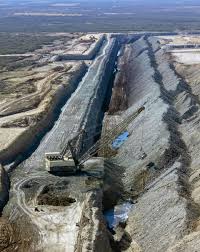
San Miguel Electric Cooperative, Inc. v. Lively (No. 04-24-00383-CV; October 22, 2025) arose from a dispute between an electric co-op and landowners over the ownership of lignite coal under the landowners’ property in McMullen County. In 1931 the heirs to the Franklin Ranch executed a partition deed dividing the property into numerous tracts, each subject to an express reservation of ‘all Coal and Kaolin or Clay Products on or under” the tracts. Each heir received an undivided 1/12 interest in the reservation (rather than a partitioned interest). San Miguel either leased or purchases several tracts, eventually acquiring 68.5% of the interest to “all coal” under the reservation. In 2021 San Miguel applied for a coal mining operations permit from the RRC to strip mine the Franklin Ranch for lignite. Several successors-in-interest to certain tracts filed suit seeking a declaration that “all coal” in the 1931 reservation did not include lignite. Both parties moved for summary judgment. The trial court granted the landowners’ motion. San Miguel petitioned for a permissive appeal, which the court of appeals granted.
In an opinion by Justice Meza, the court of appeals reversed and rendered for the co-op. San Miguel argued, of course, that the reservation of “all coal” included lignite, which the Oxford English Dictionary defines as “a soft brownish coal showing traces of plant structure, intermediate between bituminous coal and peat.” The parties agreed that the 1931 deed was unambiguous, so the court wasn’t much interested in the extrinsic evidence offered by the parties of “contemporary deeds and leases from the region.” Looking to the plain text of the deed, the court construed “all” to mean “the entire or unabated amount or quantity of; the whole extent, substance, or compass of; the whole.” OED (1913). “Coal,” according to the same dictionary, means a “mineral, solid, hard, opaque, black or blackish, found in seams or strata in the earth, and largely used for fuel; it consists of carbonized vegetable matter deposited in former epochs of the world’s history. According to the degree of carbonization, coal is divided into three principal kinds, anthracite or glance coal, black or bituminous coal, and brown coal or lignite in each of which again various qualities are distinguished.” Noting that this definition hasn’t changed much since 1913 and still identifies lignite as a “chief variet[y] of coal,” the court could find no reason to construe the term to exclude lignite. No statutory language does that, and Texas courts have consistently considered lignite to be a form of coal. The court thus reversed and rendered judgment in favor of San Miguel.