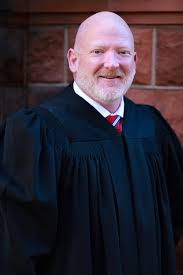
Justice Adrian Spears
After a careful review and consideration of comparable cases, the San Antonio Court of Appeals has largely upheld a jury’s award of substantial noneconomic and punitive damages in a fatality accident case involving a drunk driver. But the court also found that the noneconomic damages award was excessive and suggested a remittitur, as requested by the parties.
Jones v. Hatch (No. 04-24-00553-CV; April 1, 2026) arose from a 2020 head-on collision that killed the driver of one of the vehicles. The deceased’s parents sued the driver of the other vehicle, which was traveling the wrong way on the highway, for wrongful death. The jury found that Defendant’s negligence proximately caused the collision, that Defendant operated his vehicle while intoxicated, and that Defendant’s intoxication caused the fatal injuries. The jury awarded (1) $10 million to each Plaintiff for past mental anguish, (2) $5 million each for future mental anguish, (3) $1 million each for loss of companionship and society, (4) $5 million each for future loss of companionship and society, (5) $300,000 each for past pecuniary loss, and (6) $1 million each for future pecuniary loss. It also awarded the deceased’s estate $24 million for decedent’s pain and mental anguish. Finally, the jury found that Defendant was grossly negligent and awarded decedent’s estate $13.12 million in punitive damages. The trial court rendered judgment on the verdict for a total of about $81 million. Defendant appealed.
In an opinion by Justice Spears, the court of appeals affirmed in part and reversed in part. Defendant asserted that the evidence was factually and legally insufficient to support the jury’s award of actual damages that the damages were “excessive.” Beginning with the past and future mental anguish damages, the court cited the Parkway standard (“direct evidence of the nature, duration, and severity of anguish, thus establishing a substantial disruption in the plaintiff[‘s] daily routine” or a “high degree of mental pain and distress that is more than worry, anxiety, vexation, embarrassment, or anger”). The court concluded that there was legally sufficient evidence to support the mental anguish damages award based on the testimony of Plaintiffs’ responses to their daughter’s death (which played out over several weeks).
But as to whether the awards were excessive, the court looked to the principle that “[w]hile there is a presumption of some mental anguish from the death of a family member, that presumption does not also require the court to find the evidence is factually sufficient to support an extremely large award” (citation omitted). Comparing the damages awarded in this case to those in two others involving parents whose children died from catastrophic accidents, a son who was fatally burned in a refinery fire and another killed in a motorcycle accident, the court observed that here the evidence showed that “[deceased’s] injuries and her death initially invoked intense emotional responses from [each Plaintiff]. Nevertheless, by three or four months after [her] death, both [Plaintiffs] were able to resume their day-to-day activities,” though “they experienced heightened grief” on the anniversary of her death and her birthday. The evidence didn’t show “any long-term secondary illnesses” nor that “[deceased’s] death regularly interfered with their participation in daily activities.” Based on this evidence, the court ruled that the jury’s award of $10 million for each Plaintiff’s past mental anguish and $5 million each for future mental anguish were “not justified by the evidence and are excessive.”
Turning to the awards for loss of companionship and society, the court weighed evidence showing that Plaintiffs had a close relationship with their daughter and determined that the evidence was legally sufficient to support an award of some damages. But again the court concluded that the amount of damages awarded were excessive, citing the fact that decedent had lived on her own for several years and in different cities, and that decedent only visited them a few times a year. The jury’s award of $12 million was too much. As to the award for past and future pecuniary damages, the court found no evidence showing “loss of the care, maintenance, support, services, advice, counsel, and reasonable contributions of a pecuniary value that [Plaintiffs], in reasonable probability, would have received from [the deceased] had she lived.” The deceased didn’t live with them or provide any financial support, only moral support that couldn’t be quantified.
Next came the $24 million awarded for the deceased’s pain and mental anguish. The key issue here was whether decedent was conscious after the accident and, if so, for how long. Turning to the police report, the court observed that the officer saw her in the wrecked vehicle and that she was unresponsive, despite repeated efforts to communicate with her. Once she was cut loose from the vehicle, the paramedic found her unresponsive but noted that her eyes were partially open, though her pupils were sluggish and minimally reactive to light. He assigned a low score on the Glasgow Coma Scale but, because she responded to a sternal rub, concluded that she was responsive to pain. Once she got to the hospital, however, she was intubated and comatose. Her injuries, finally, were catastrophic. The court thus concluded that the deceased was conscious and capable of feeling pain before admission to the hospital. As to excessiveness, the court observed that about 45 minutes elapsed between the wreck and the deceased’s admission to the hospital. She also swerved to avoid the collision, some evidence that she knew the collision was imminent. Based on this evidence, the court found the award excessive.
Defendant argued that the jury’s $13.12 million punitive damages award was subject to the $750,000 cap. Plaintiffs alleged that Defendant committed the felony offense of intoxication manslaughter, thus lifting the cap. Here the police officer on the scene testified that Defendant was indeed intoxicated and drove the wrong-way up a freeway off-ramp. His BAC was more than twice the legal limit. And at trial, Defendant took the Fifth and didn’t address the question. The jury was thus free to infer that Defendant was intoxicated, and the evidence was legally and factually sufficient to support a finding of intoxication.
Finally, the court got to the question of whether Plaintiffs produced clear and convincing evidence of Defendant’s gross negligence. Defendant argued that the evidence didn’t meet the bar because it didn’t show that he had subjective awareness that he was driving the wrong way up the ramp and “that he knowingly did so with conscious indifference to the safety of others.” But the jury only had to find that Defendant “had subjective awareness of the risks involved in driving while intoxicated, but nevertheless proceeded with conscious indifference to the rights, safety, or welfare of others.” It didn’t help that Defendant was a deputy U.S. marshal and should have known better. A “reasonable juror could have formed a firm belief or conviction that [Defendant] was subjectively aware of the risks of driving while intoxicated, but nevertheless acted with conscious indifference to the rights, safety, and welfare of others.”
The parties urged the court to suggest a remittitur rather than remanding for new trial. The court agreed and cut down Plaintiffs’ combined mental anguish and loss of companionship damages from $42 million to $19 million, and the deceased’s mental anguish award from $24 to $6 million. The punitive damages award stood.