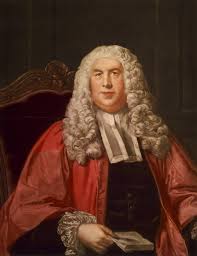
Sir William Blackstone
In a case that conjures up William Blackstone’s Commentaries on the Laws of England (1765-69), the Texas Supreme Court has held that the Waco Court of Appeals did not properly consider the rule of equity that permits an award of monetary damages to a party seeking specific performance under certain circumstances.
White Knight Development, LLC v. Dick B. Simmons, Sr., and Julie M. Simmons (No. 23-0868; June 13, 2025) arose from a dispute between a developer and sellers of residential property (land) in a Bryan subdivision. Worried that certain set-back requirements and other restrictions would hinder its development plans, White Knight got the Simmonses to agree to a buy-back deal that entitled it to demand that the Simmonses repurchase the property if the residents of the subdivision to extend the restrictions beyond a specified date. White Knight paid the Simmonses $400,000. Shortly thereafter, the residents extended the restrictions. White Knight invoked the buy-back agreement for the $400,000 sales price. The Simmonses, however, declined to buy back the land. White Knight sued for breach of contract and fraudulent inducement, seeking both specific performance and damages. The Simmonses argued that the condition precedent to the buy-back provision never occurred and counterclaimed for a declaration that the restrictions were invalid.
The trial court ruled in White Knight’s favor on the breach of contract claim (but didn’t rule on the fraud claim) and awarded specific performance ($400,000) and another $308,000 in consequential damages specified in the court’s findings of fact and conclusions of law. Both parties appealed. The Waco Court of Appeals modified the judgment to delete the award of consequential damages but otherwise affirmed. Although the court recognized that equity recognizes an award of monetary compensation alongside specific performance “when it is deemed necessary to place the parties in the same position as if the contract was performed,” it reversed the damages award because the trial court didn’t expressly state that the award was equitable in nature.
In an opinion by Justice Huddle (and that only a true law nerd can), SCOTX reversed and sent the case back to the court of appeals for further consideration. The question boiled down to whether White Knight, which sought specific performance and compensatory damages in its breach of contract claim, ran afoul of the general rule that a party seeking to recover for breach of contract must elect either legal damages or specific performance, or whether its request for both forms of relief met a narrow exception to the rule. As stated above, the court of appeals properly recognized the existence of the exception but did not apply it. In either case, “the goal is to put the plaintiff back to the position it would have been in had there been no breach” (citations omitted). Put another way, “[c]ontract law precludes the nonbreaching party ‘from recovering damages for breach of contract that would put [it] in a better position than if the contract had been performed” (citations omitted).
What does that mean exactly? What types of damages can be awarded “alongside” the equitable remedy of specific performance? The problem that the exception addresses, Justice Huddle observed, a situation in which specific performance cannot itself make up for monetary loss that occurs between the time of the breach and the judgment. To be recoverable, the monetary damages must consist of “property-related expenses incurred due to the breaching party’s delay in performing” the contract. They also have to be “directly traceable to the delay, foreseeable, commercially reasonable, and incurred in connection with its care and custody of the Simmons property.” In the present case, the trial court ordered the Simmonses to pay back the purchase price, but this didn’t restore White Knight to the same position as it was prior to the breach. Instead, for example, it had to pay property taxes and interest incurred after the repurchase deadline. The Simmonses could reasonably foresee this, “even if the applicable tax rate and total amount owed were not known.” More attenuated and unforeseeable, however, were White Knight’s other expenses, such as interest paid on loans to continue business operations. Accordingly, White Knight couldn’t recover them.
Justice Huddle pointed to the UCC’s definition of “incidental damages” for guidance. § 2.710, Business & Commerce Code. Although this section applies to goods, she observed, in principle it works for real property and courts of appeals have referred to it “in shaping the contours of awards.” Rather than engaging in the analysis itself, the Court remanded to the court of appeals to assess which expenses awarded by the trial court as an equitable monetary award were necessary to put White Knight in its pre-breach position. To be recoverable, “[e]ach category of expenses awarded must be (1) directly traceable to the defendant’s delay in performance, (2) foreseeable at the time of contracting, and (3) commercially reasonable.” It “must also be incurred in connection with the care and custody of the particular property in dispute.”
We’ll see what the court of appeals does next. Based on Justice Huddle’s opinion, however, we would venture to guess that White Knight won’t get back the following: forbearance and refinancing fees and interest payments for three loans; penalties for past due property taxes, at least those not related to the Simmonses property (which only came to $875); operating loan interest for White Knight to continue business; loan interest related to another property that had to be refinanced; and credit card interest on operating expenses. It’s hard to tell exactly what’s left, but it might be not much more than $4,862.23 of property taxes paid on the Simmonses property. It’s hard to see that the other expenses were foreseeable by the Simmonses, or how much of them were “directly traceable” to the delay.