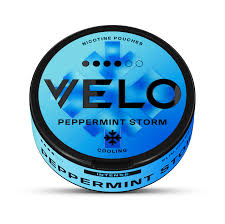
 In an opinion that significantly affects the growing market for nicotine products that don’t contain tobacco, the Texas Supreme Court has held that VELO pouches, which are made of non-tobacco plant matter soaked with nicotine isolate, are taxable as a “tobacco subsitute” under Texas’ tobacco tax.
Kelly Hancock, Acting Comptroller of Public Accounts of the State of Texas; The Office of Comptroller of Public Accounts of the State of Texas; and Ken Paxton, Attorney General of the State of Texas v. RJR Vapor, Co., LLC (No. 24-0052; May 8, 2026) arose from a dispute between RJR and the Comptroller over the taxability of nicotine pouches sold under the brand name VELO. The primary ingredient in VELO pouches is not tobacco but microcrystalline cellulose, a naturally-occurring organic compound. This stuff is then infused with nicotine isolate, 99% pure nicotine that is chemically extracted from tobacco plants. When the Comptroller assessed the tobacco tax on VELO, RJR protested, seeking a tax refund and declaratory judgment that VELO pouches weren’t taxable as tobacco products. Both parties moved for summary judgment. The trial court granted judgment to RJR, ordered a refund, and ruled that the statutory phrase “made of tobacco or a tobacco substitute” was unconstitutional. The Austin Court of Appeals upheld the trial court on the basis that VELO pouches were neither made of tobacco or constituted a tobacco substitute, “because nicotine isolate alone cannot take the place or function of tobacco leaves. The Comptroller appealed.
In an opinion by Justice Busby, joined by the Chief Justice and Justices Devine, Bland, Huddle, and Young, SCOTX reversed. Section 155.0211(a), Tax Code, defines tobacco as smoking tobacco, chewing tobacco, snuff, or “an article or product that is made of tobacco or a tobacco substitute and that is not a cigarette or an e-cigarette” as statutorily defined elsewhere. The Comptroller argued that VELO pouches are made of a tobacco substitute because the nicotine in them replaces the tobacco, and VELO is used recreationally. RJR argued that in the tobacco industry “tobacco substitute” means plant-based ingredients that replace tobacco in certain tobacco products. SCOTX rejected both positions and adopted its own interpretation of the statute.
First, the Court found fault with the Comptroller’s interpretation for two reasons: “(1) nicotine alone cannot take the place or function of tobacco in any of the expressly taxed tobacco products, and (2) the statute does not rely on the purpose for which the substitute is used to determine its taxability.” The first prong of the argument derives from the practice of many consumers of using VELO or similar products when trying to quit “traditional tobacco products.” VELO pouches, consequently, are a “tobacco substitute.” But are the pouches made of something that is actually a substitute for tobacco? No, because “[t]he nicotine isolate in VELO pouches, which typically makes up only five percent of oral nicotine pouches by weight, cannot physically take the place or function of any of the products taxed” by the statute. As Justice Busby pointed, you can’t roll a cigar, fill a pipe, chew, dip or sniff, or fill a pouch with it. The Court also rejected the Comptroller’s argument that the intent of the statute is to tax nicotine for recreational use. But the statute doesn’t say anything about the purpose for which the products are used.
Second, the Court likewise found fault with RJR’s interpretation. It rejected RJR’s contention that the “industry” meaning of a tobacco substitute should determine the statutory meaning. If the industry meaning were used, it would limit tobacco substitutes to reconstituted tobacco sheets or plant material that partially or completely replaces tobacco leaf in certain products. The Court went along with the latter interpretation but determined that VELO actually meets that definition because it consists of non-tobacco plant matter and nicotine, which “take[] the place of and serve[] a similar function to the pulverized tobacco taxed under” the statute. The Court reached this conclusion through the plain language of the statute, under which “tobacco substitute” means “a substitute for tobacco as it is used in traditional tobacco products like those” specifically listed in the statute, i.e. smoking tobacco, chewing tobacco, and snuff or snus. Since VELO pouches are made from plant matter and nicotine, they contain “a one-for-one replacement for the tobacco plant matter in the pulverized tobacco products” taxable under the statute.
Having determined that VELO pouches are taxable as tobacco substitutes, the Court remanded RJR’s constitutional challenge to the court of appeals, which didn’t reach the issue. RJR mounted a vagueness challenge and an equal-and-uniform challenge. The Court easily dismissed the first, since it already found that the statute applies specifically and unambiguously applies to VELO pouches. In fact, Justice Busby pointed out that SCOTX “has not reviewed a tax statute for vagueness,” and no other state or federal court had either. RJR’s equal-and-uniform challenge asserted that the tax didn’t apply to “nicotine replacement therapies,” of which VELO pouches are one. The Court kicked this interesting argument back to the court of appeals for its review.
Justice Sullivan, joined by Justice Bland, concurred. He pointed out that the whole point of manufacturing products containing tobacco is to convey nicotine to consumers. So, he asks, “[w]hy do we care whether plant matter of any kind is found inside a VELO pouch? He expressed doubt that “the presence of ‘microcrystalline cellulose’ … is essential to a VELO pouch’s having been ‘made … a tobacco substitute’” in the first place. If “the value and addictive” nicotine is “the key ingredient” of any product, he suggests, “[t]hat fact alone is enough … to hold that VELO pouches are ‘made of … a tobacco substitute’ and should get taxed accordingly.”
It seems to us that both opinions are correct, but could the argument be pushed as far as synthetic nicotine? Under Justice Sullivan’s reasoning, it could, because synthetic nicotine, like plant-derived nicotine, is still a substitute for tobacco. Under the majority’s reading of the statute, it could as well, if the synthetic product were blended with plant matter. Perhaps it’s an academic question, but one might imagine some product that would be entirely synthetic and still act like a VELO pouch. The Legislature might have to step in if it gets to that point.