 The Tyler Court of Appeals has upheld a $450,000 judgment against an East Texas grocery store chain because it did not preserve for appeal the issue of Plaintiff’s capacity to sue for past medical expenses.
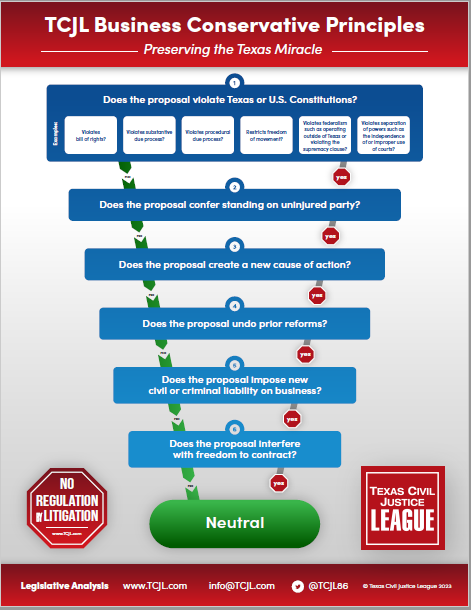
Brookshire Grocery Company v. Frankie York (No. 12-25-00002-CV; September 17, 2025) arose from a slip-and-fall in a Brookshire grocery store in Chandler, Texas. Plaintiff filed suit, asserting premises liability. Plaintiff sought medical treatment from a number of providers, including a clinic owned by an orthopedic surgeon. At the clinic’s behest, Plaintiff signed a document entitled “Partial Assignment of the Causes of Action, Assignment of Proceeds, Contractual Lien & Authorization.” Based on the partial assignment, Brookshire moved to dismiss Plaintiff’s claims, alleging that she lacked standing to purse recovery of the cost of services provided by the clinic. The trial court denied the motion.
A jury subsequently returned a verdict finding Brookshire 65% liable and York 35% and awarded Plaintiff damages for past medical expenses in the amount of $225,000. After denying Brookshire’s motion to reconsider its motion to dismiss, the trial court entered judgment awarding Plaintiff $419,250 in actual damages and $29,483.35 in prejudgment interest. The trial court denied Brookshire’s motions for JNOV and new trial. Brookshire appealed.
In an opinion by Chief Justice Worthen, the court of appeals affirmed. On appeal Brookshire reasserted its standing argument. The court observed that “[w]hen there is an assignment, the assignee stands in the shoes of the assignor and may assert those rights that the assignor could assert, including bringing suit” and that [a]n assignor of a cause of action who has not retained some right or interest in the cause of action is precluded from bringing suit.” Standing, however, refers to whether a plaintiff has been “personally aggrieved, regardless of whether it is acting with legal authority.” Capacity, on the other hand, is a question of whether a party has the legal authority to act, regardless of whether it has a justiciable interest in the controversy (citations omitted). Plaintiff argued that Brookshire didn’t preserve the standing issue for appeal because “though couched in terms of standing, [Brookshire’s argument] is substantively a challenge to her capacity to sue for the past medical expenses related to her treatment with [the clinic].”
Pointing to SCOTX authority distinguishing between standing and capacity claims, the court observed that “Brookshire is contending that [Plaintiff] cannot assert claims that allegedly belong to someone else. Brookshire’s challenge that [Plaintiff] lacks standing is, therefore, more accurately considered a challenge to [Plaintiff’s] capacity to sue” (citations omitted). And, unfortunately for Brookshire, “the issue of capacity to sue (if the lack thereof is not evidence from the petition) is waived both at trial and on appeal if it is not challenged by a verified pleading.” In this case, Plaintiff’s lack of capacity was not so evident, and Brookshire didn’t assert that it satisfied the verified pleading rule, Rule 93, TRCP. Brookshire thus waived the issue and had nothing to appeal. The trial court’s judgment was affirmed.